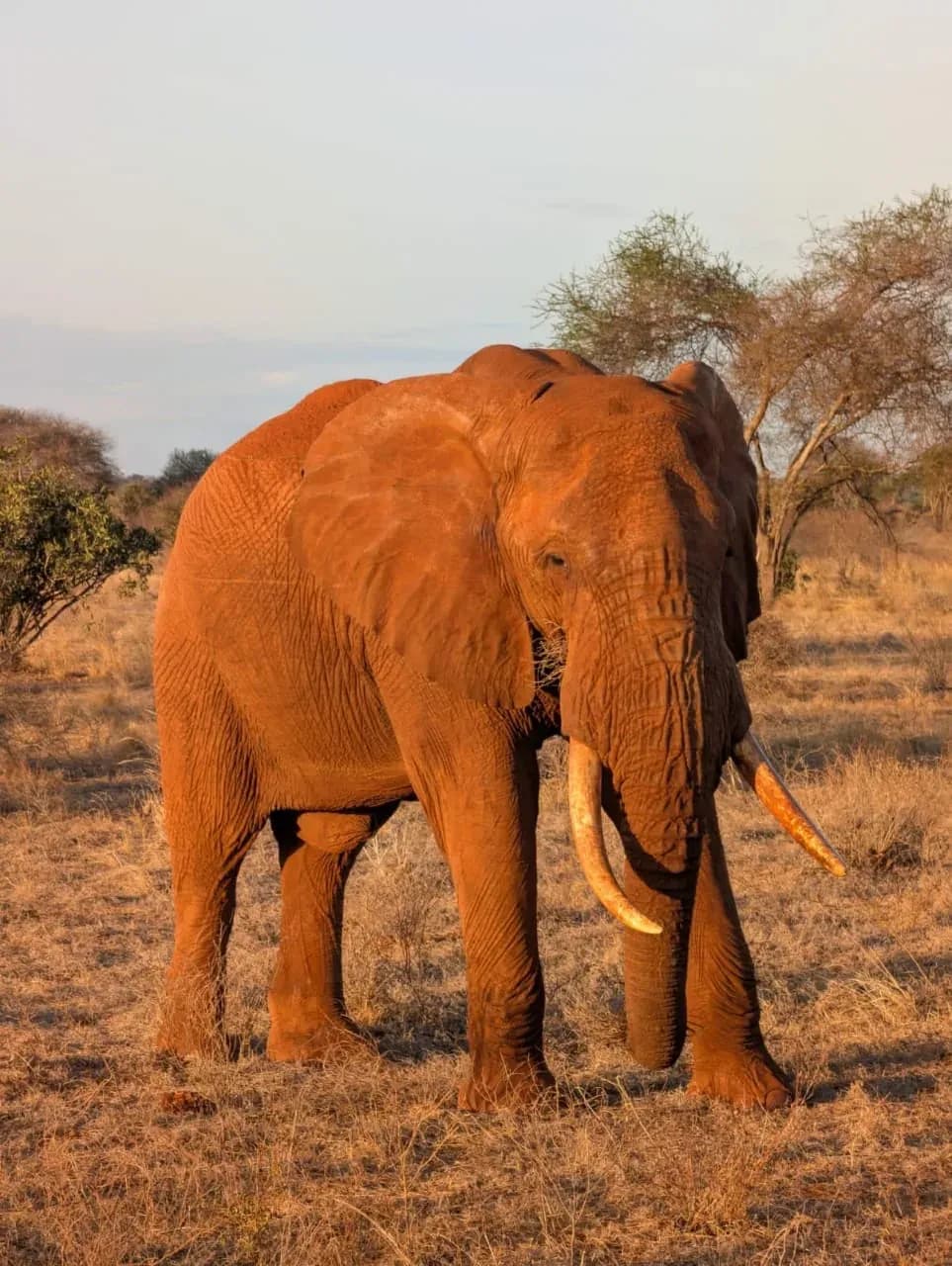
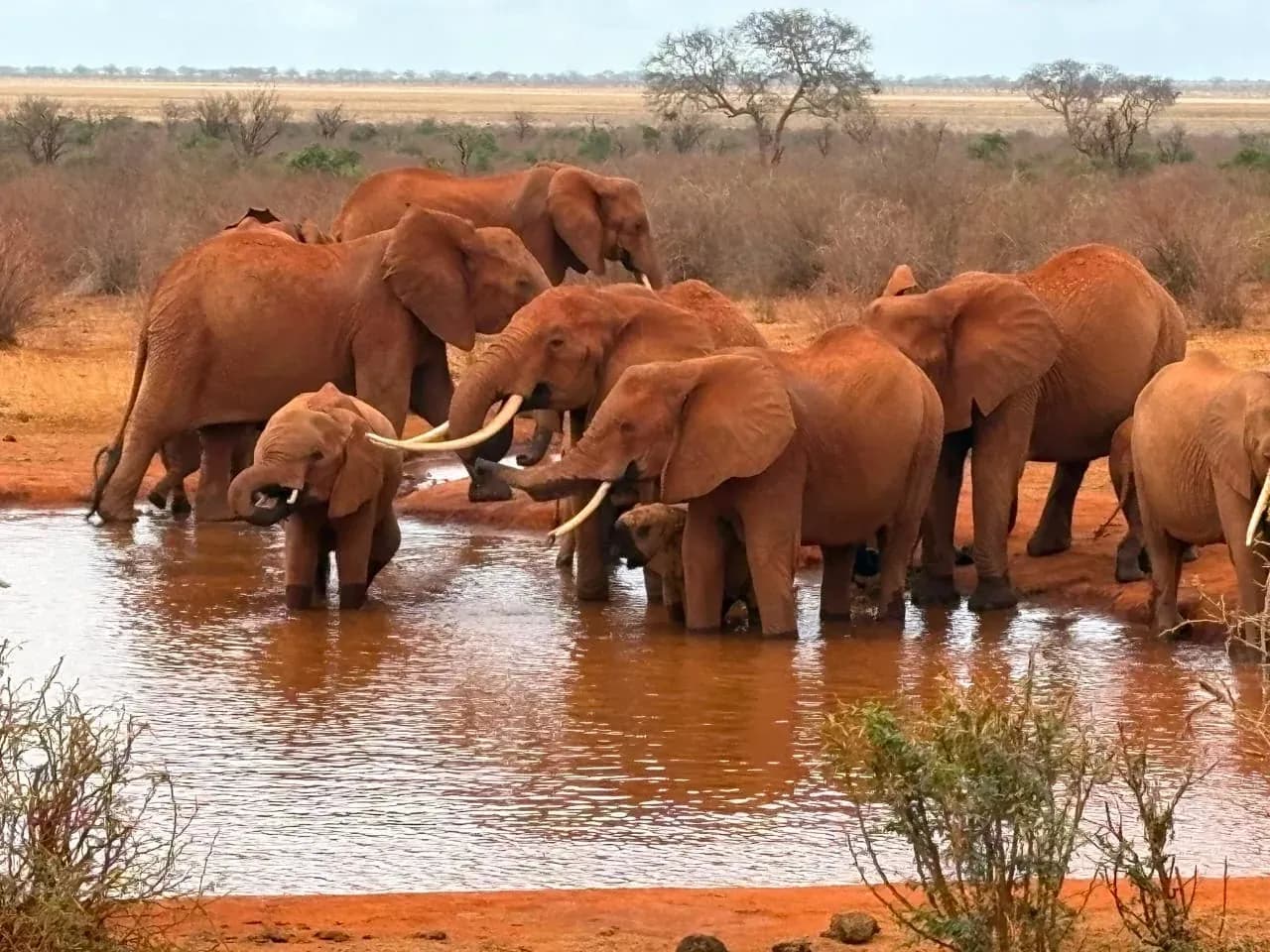
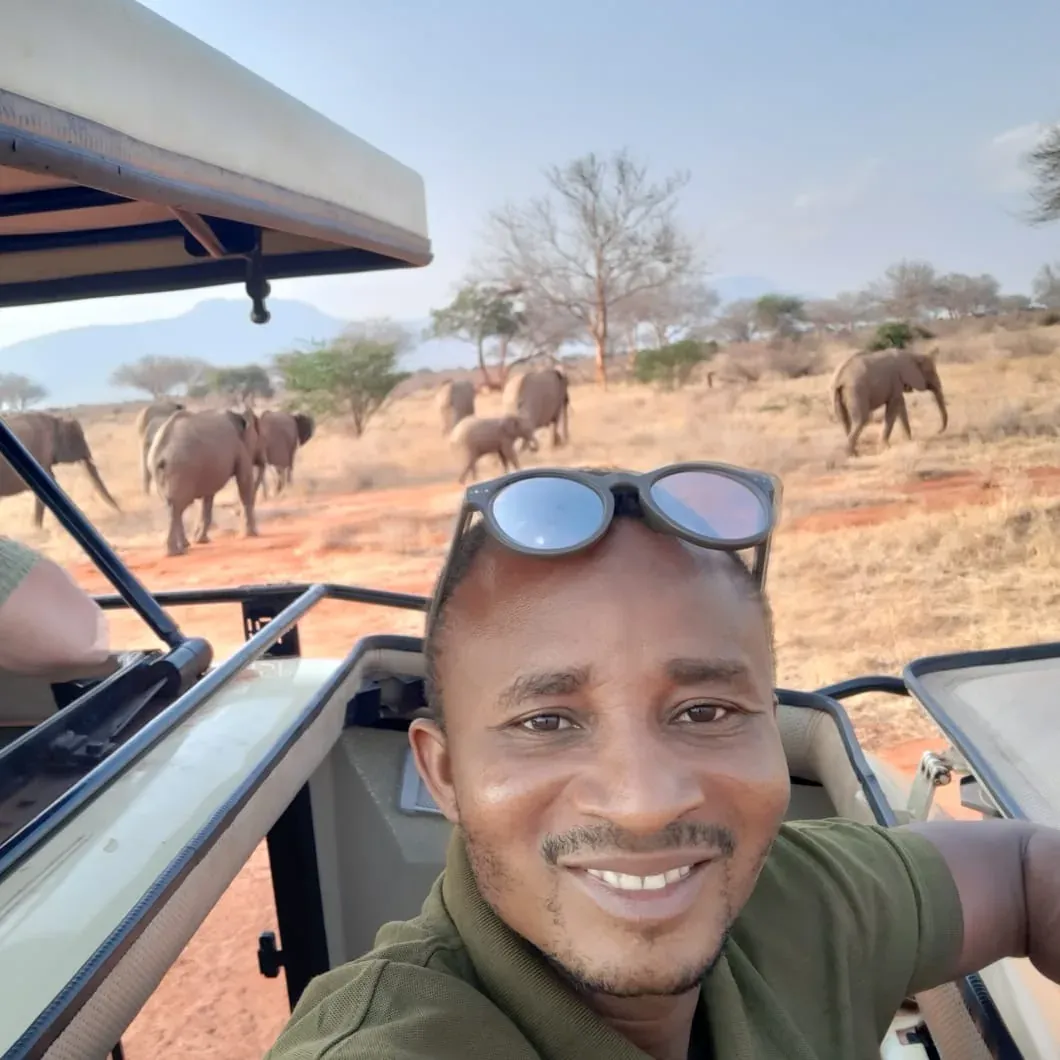
The park closest to the coast and one of the largest in Kenya: open plains, red earth and the elephants that take its colour.
Tsavo East National Park is managed by the Kenya Wildlife Service and, together with Tsavo West, forms one of the largest protected areas in the country. From the coast it is the park reached by the shortest transfer, which is why it is the first safari for many travellers staying in Watamu or Malindi.
The landscape is open: low savannah, thorn scrub and the plain along the Galana river, which runs from the west down towards the ocean. Along the western edge lies the Yatta Plateau, often described as one of the longest lava flows in the world.
Nature and culture
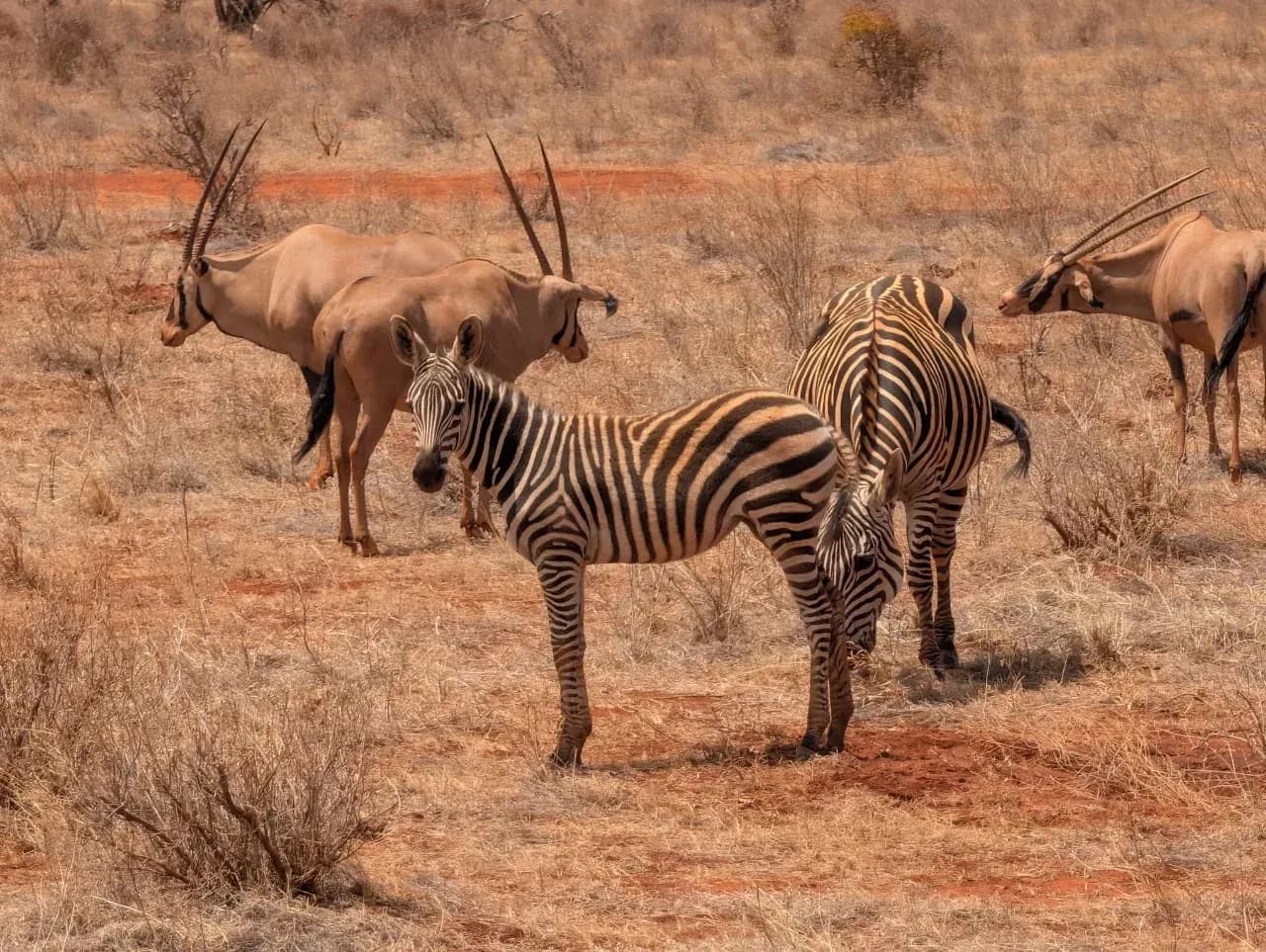
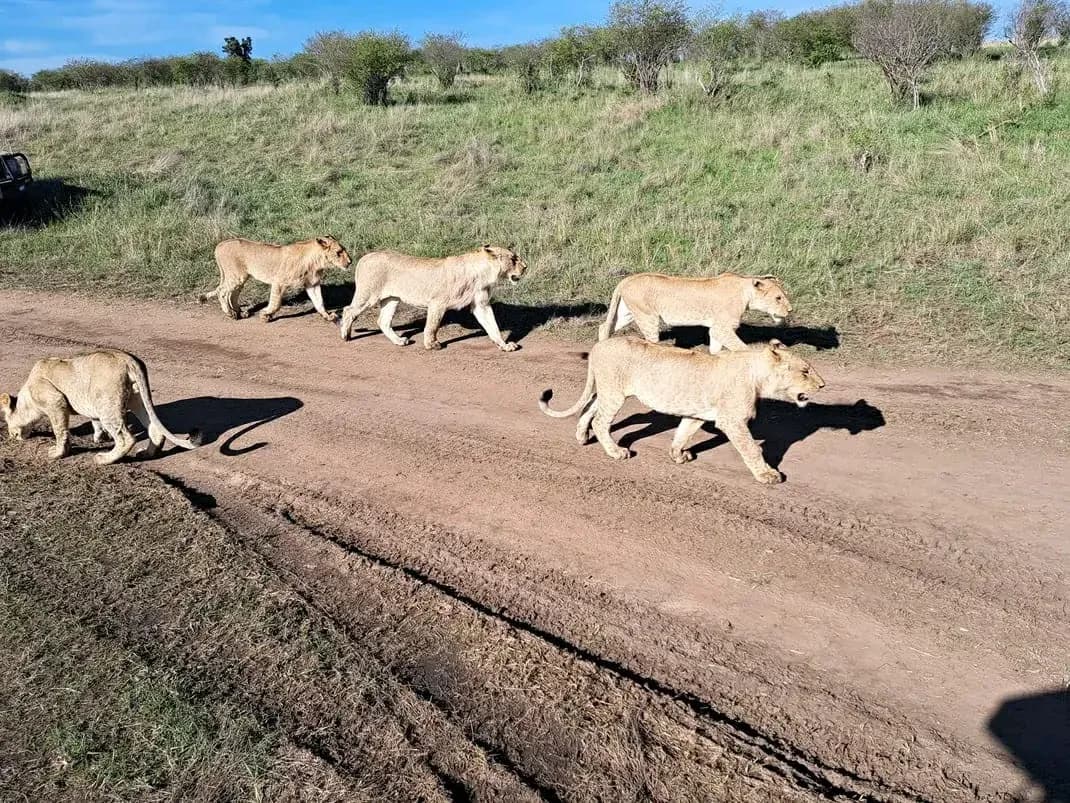
Elephants, buffalo, giraffe, zebra, oryx, gazelle, jackals and lions are the animals you meet most often; the reddish colour of the Tsavo elephants comes from the dust of the park, not from their skin. No sighting is guaranteed: the animals move, and they do not follow our programme.
The name Tsavo runs through the history of the Mombasa-Nairobi railway of the late nineteenth century and the story of the Tsavo lions, told and embellished many times over. The area you cross to get there is Kamba and Taita land: the villages along the road are as much part of the journey as the savannah.
When to come
The park can be visited all year round. In the drier months, roughly June to October and January to March, the vegetation is low and the animals gather near water: spotting them is easier. After the long rains and the short rains the landscape turns green, the wildlife spreads over a wider area and some tracks can be hard going.
Getting there
From the coast you usually enter through Sala gate, the closest one to Malindi, or from the Voi side, on the Mombasa-Nairobi road. The gate changes both the journey time and the road surface: the stretch towards Sala is largely unsurfaced.
Entry is paid at the Kenya Wildlife Service gates. The fees change over time and should be checked on the KWS website: I do not quote figures here.
Travel times
The times below are indicative: they change with the entry gate, road surface, traffic and season.
From
Indicative hours
Note
Watamu
4–6
Indicative one-way time, and highly variable depending on the entry gate and the state of the dirt road.
Malindi
3.5–5
Indicative time to Sala gate: the last stretch is unsurfaced and slows down after rain.
Nairobi
5–7
Indicative time by road towards the Voi side, including the traffic getting out of Nairobi.
Images
On video
Elephants crossing the red dirt track in front of the stopped vehicle.0:09
Giraffes browsing the acacias on the red-earth savannah under an open sky.0:09
Two parks that look nothing alike: the red earth of Tsavo East and the low plains of Amboseli, with two nights so you are not spending the whole trip chasing the clock.