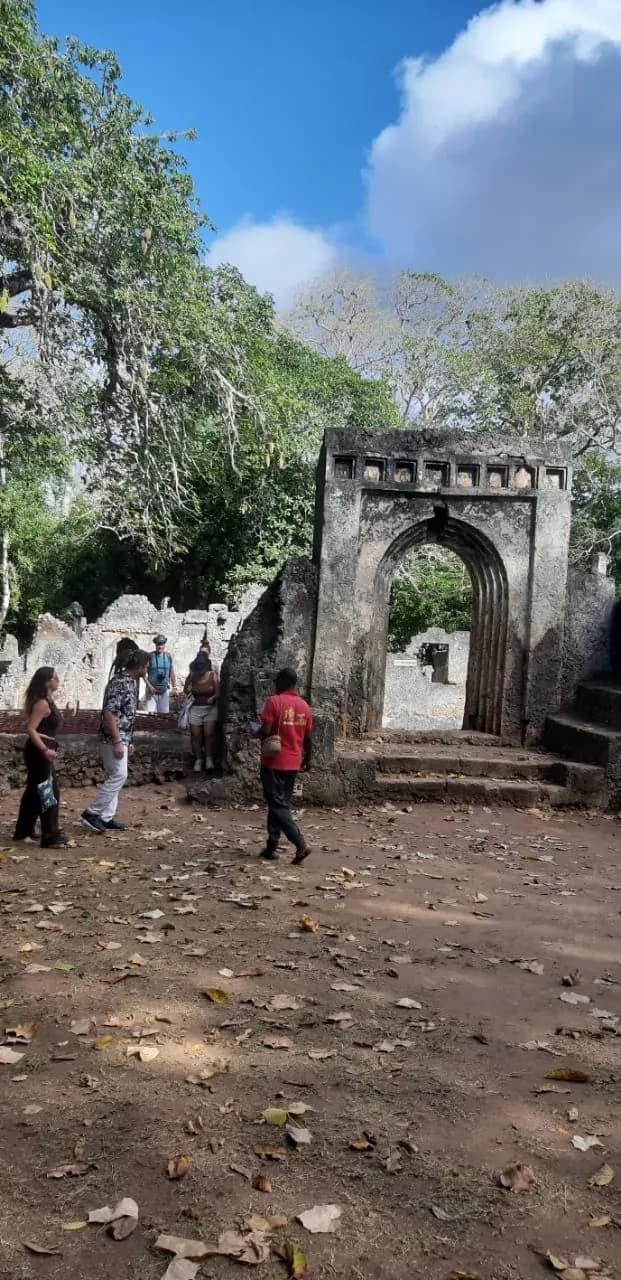
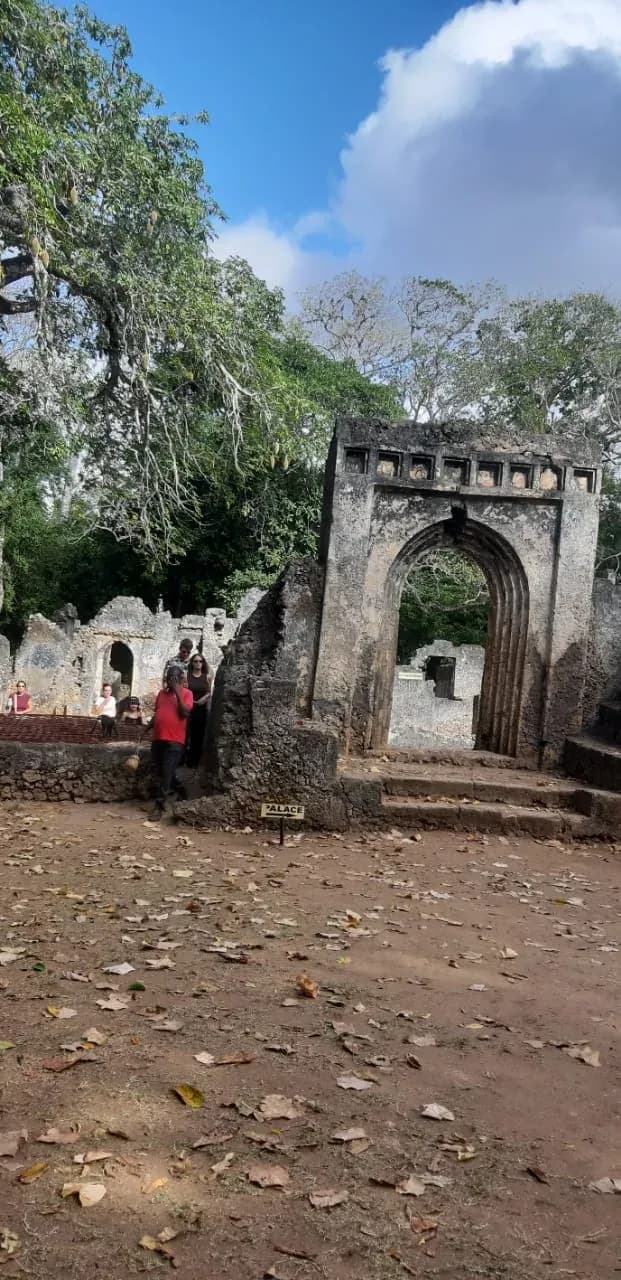
The ruins of a Swahili town built in coral stone, abandoned centuries ago and taken back by the forest, now inscribed on the UNESCO World Heritage List.
Gedi (Gede) is what remains of a Swahili town built in coral stone between the twelfth and the fifteenth centuries and abandoned in the centuries that followed. The site is managed by the National Museums of Kenya and is inscribed on the UNESCO World Heritage List.
You walk among the great mosque, the palace, the houses, the wells and the tombs, with baobabs and figs that have taken the walls back. It is a shaded place: it is bearable even in the middle of the morning, and the route is almost all flat.
Nature and culture
Excavations have turned up Chinese ceramics, glass from the Middle East and Indian beads: Gedi was part of the Indian Ocean trading network, not an isolated settlement. Some of the finds are displayed in the museum on the site.
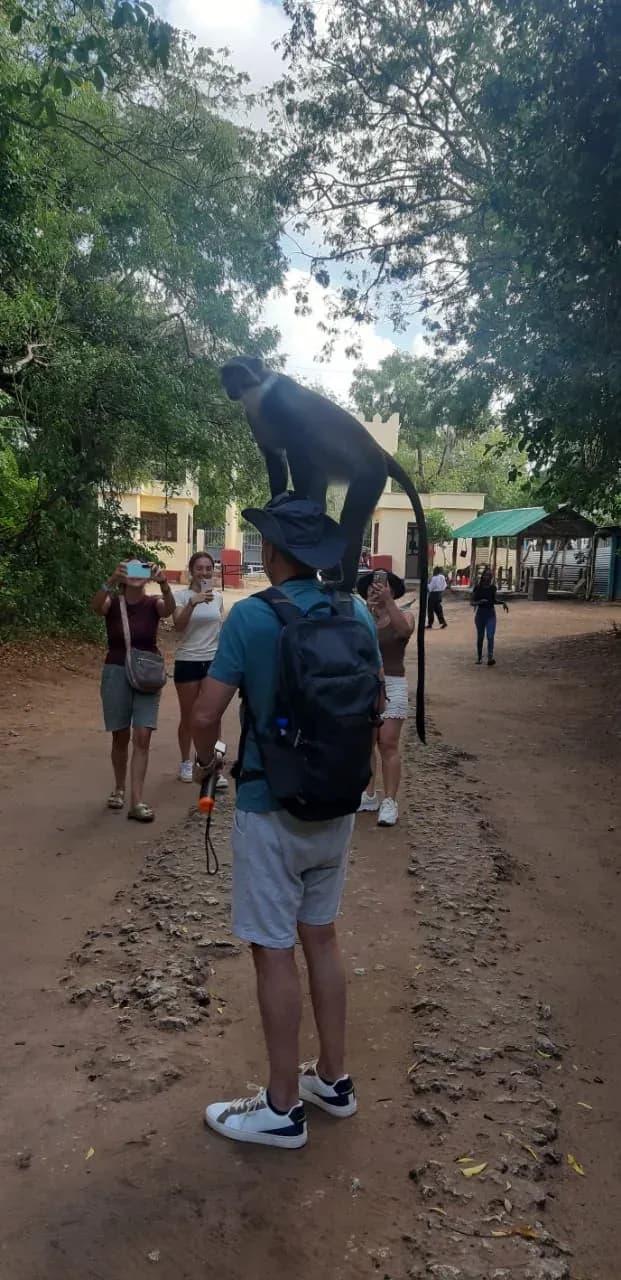
The woodland around the ruins is a fragment of coastal forest and is home to monkeys, sunbirds and the small suni antelope. For the Mijikenda communities of the area this remains a place with ritual value: you visit it with respect, without climbing on the structures and without moving anything.
When to come
The site can be visited all year round. The best hours are early morning, when the temperature is lower and the light through the trees makes the masonry legible; in the rainy months the paths can be slippery.
Getting there
Gedi is at Gede, on the Malindi-Mombasa road, a few minutes from the turning for Watamu. You get there on tarmac and the last stretch is short.
The visit is often paired with Arabuko-Sokoke forest, which begins on the other side of the road: half a day is enough for both without rushing.
Travel times
The times below are indicative: they change with the entry gate, road surface, traffic and season.
From
Indicative hours
Note
Watamu
0.25–0.5
Indicative time on tarmac, variable with local traffic.